
The False Awakening Cycle
The Ownership Wars: Who Owns YouThis flow traces the book’s movement from political illusion to the demand for genuine intellectual awakening.
increasing Bearing strength in each event
 decreasing
Bearing strength in each eventdecreasingDreaming of Freedom
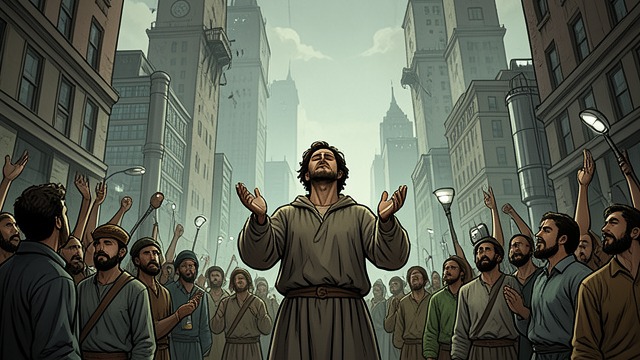
Dreaming of Freedom
The Apparent Choice
The book argues that formal choice can coexist with substantive domination. Citizens may select leaders and products while lacking control over the institutions that determine their lives.
Freedom therefore appears as a dream manufactured by ownership. People are invited to imagine themselves independent precisely while their desires are being organized from outside.
The Hidden Dependence
The tension between subjective freedom and objective dependence becomes the foundation for the book’s theory of false awakening.
The Red Pill Problem

The Red Pill Problem
Awakening as a Claim
The text questions people who announce that they have escaped social illusion. A new belief can feel liberating while merely replacing one unquestioned story with another.
The red-pill metaphor therefore becomes epistemological rather than partisan. Every revelation must be tested against the possibility that it is only a deeper layer of simulation or self-deception.
The Guru’s Authority
Charismatic teachers are presented as capable of manufacturing false awakenings in vulnerable audiences. The book demands methods of verification rather than emotional certainty.
The Ideological Signal
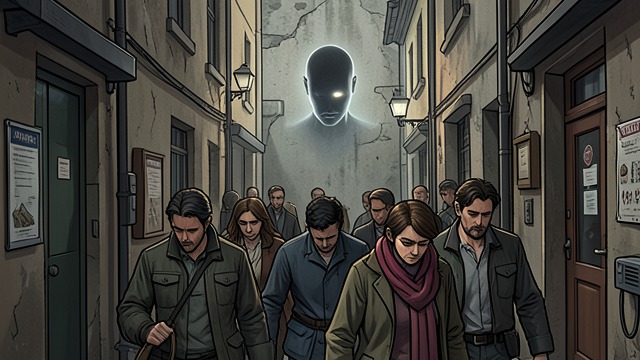
The Ideological Signal
Invisible Instruction
Mass culture is described as a signal that teaches people what to desire, fear, purchase, and obey. Its power lies in appearing ordinary rather than coercive.
The signal does not need to command political loyalty directly. It can redirect attention toward consumption, status, and resentment, leaving the underlying ownership structure intact.
Breaking the Transmission
Awakening becomes an active political task: identifying the source of the signal and developing a consciousness strong enough to resist it.
The Truth Glasses

The Truth Glasses
Seeing Beneath Appearance
The film’s glasses provide the book with a metaphor for ideological critique. They reveal commands hidden beneath advertising, public images, and consumer spectacle.
The book uses this device to argue that reality is not absent but concealed by interpretation. What changes is not the world itself, but the viewer’s capacity to recognize its governing messages.
Political Vision
True sight links perception to action. Once domination becomes visible, neutrality becomes harder to sustain.
Awakening as Collective Work
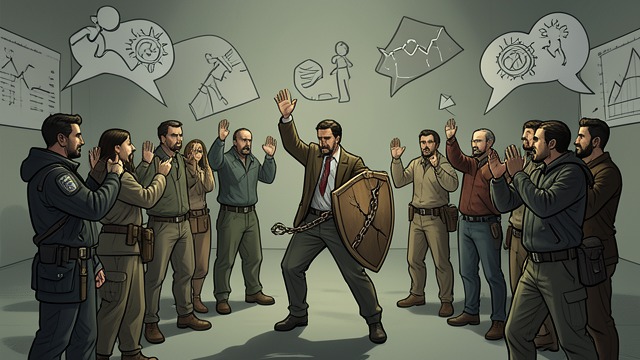
Awakening as Collective Work
Beyond Private Insight
The book rejects awakening as a purely personal achievement. Individual insight has little political force unless it becomes shared analysis and organized resistance.
The awakened subject must therefore move from recognizing manipulation to challenging ownership, inheritance, and cultural conditioning.
The Final Test
The final test is practical rather than mystical: whether people can reclaim their desires, institutions, and common future from those who have shaped them.
Early in the discussion of mass consent
In the section on awakening
After the discussion of false awakening
In the discussion of the film They Live
Near the conclusion
